
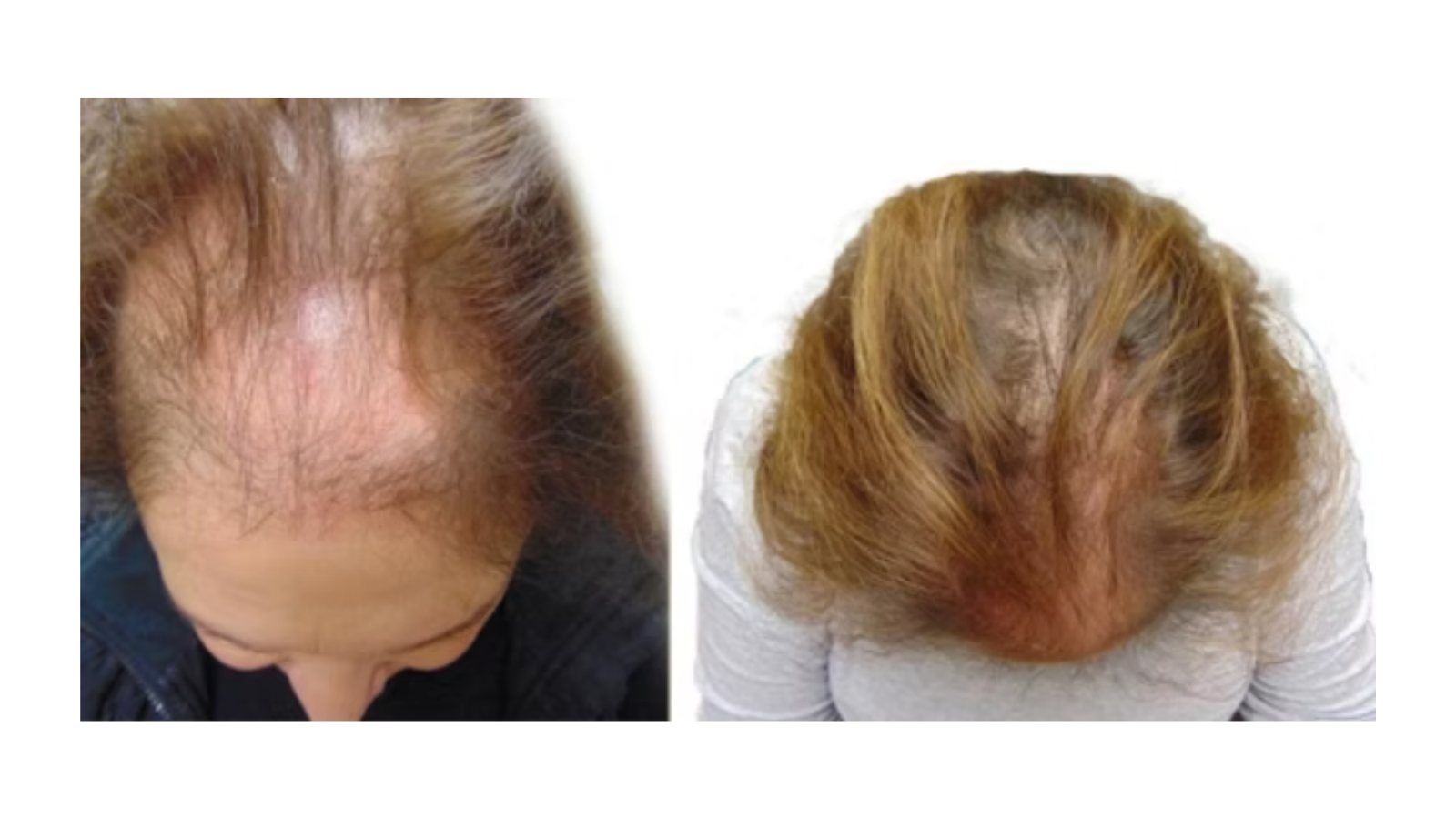
Treatment of Alopecia
Treatment of Alopecia with Regenerative Cell Therapy. This case demonstrates the effectiveness of regenerative cell therapy in promoting hair regrowth and addressing alopecia in patients who have not responded adequately to conventional treatments. By targeting hair follicle regeneration and improving scalp microcirculation, regenerative therapy offers new hope for individuals seeking effective management of alopecia. Further research and clinical studies are warranted to validate these findings and optimize treatment protocols for alopecia.
Patient Information
- Age: 59 years old
- Gender: Female
- Ethnicity: White
- Medical History: No allergies or genetic diseases. Moderate alcohol consumption (3–4 drinks per week) and daily coffee intake (2–3 cups per day). Received multiple vaccinations with boosters since childhood. Currently taking Rinvoq for the past two years to slow hair loss.
Presenting Complaint
The patient presented with alopecia, characterized by progressive hair loss despite treatment with Rinvoq, which had slowed but not reversed the condition. She sought additional therapy to promote hair regrowth and improve overall scalp health.
Treatment Approach
To address persistent hair loss, the patient elected to undergo regenerative cell therapy. Over a four-month period, she completed four treatment sessions, each consisting of six units of complete regenerative cell factors.
Treatment was administered through a multimodal approach, including intravenous infusion, subcutaneous injections, and topical application via micro-channel delivery to target the scalp directly.
Clinical Course
Following completion of the four-month regenerative therapy protocol, the patient experienced noticeable improvements in hair regrowth. The treatment targeted underlying contributors to alopecia by stimulating hair follicle regeneration and enhancing scalp microcirculation.
Follow-Up
Post-treatment follow-up included regular monitoring of hair regrowth progress. Ongoing assessments confirmed sustained improvements in hair density, thickness, and overall hair quality, supporting the long-term effectiveness of regenerative cell therapy.
Conclusion
This case demonstrates the potential effectiveness of regenerative cell therapy in promoting hair regrowth and managing alopecia in patients who have not responded adequately to conventional treatments. By targeting hair follicle regeneration and improving scalp microcirculation, regenerative therapy offers a promising option for individuals seeking improved outcomes. Further clinical research is warranted to validate these findings and optimize treatment protocols for alopecia.