
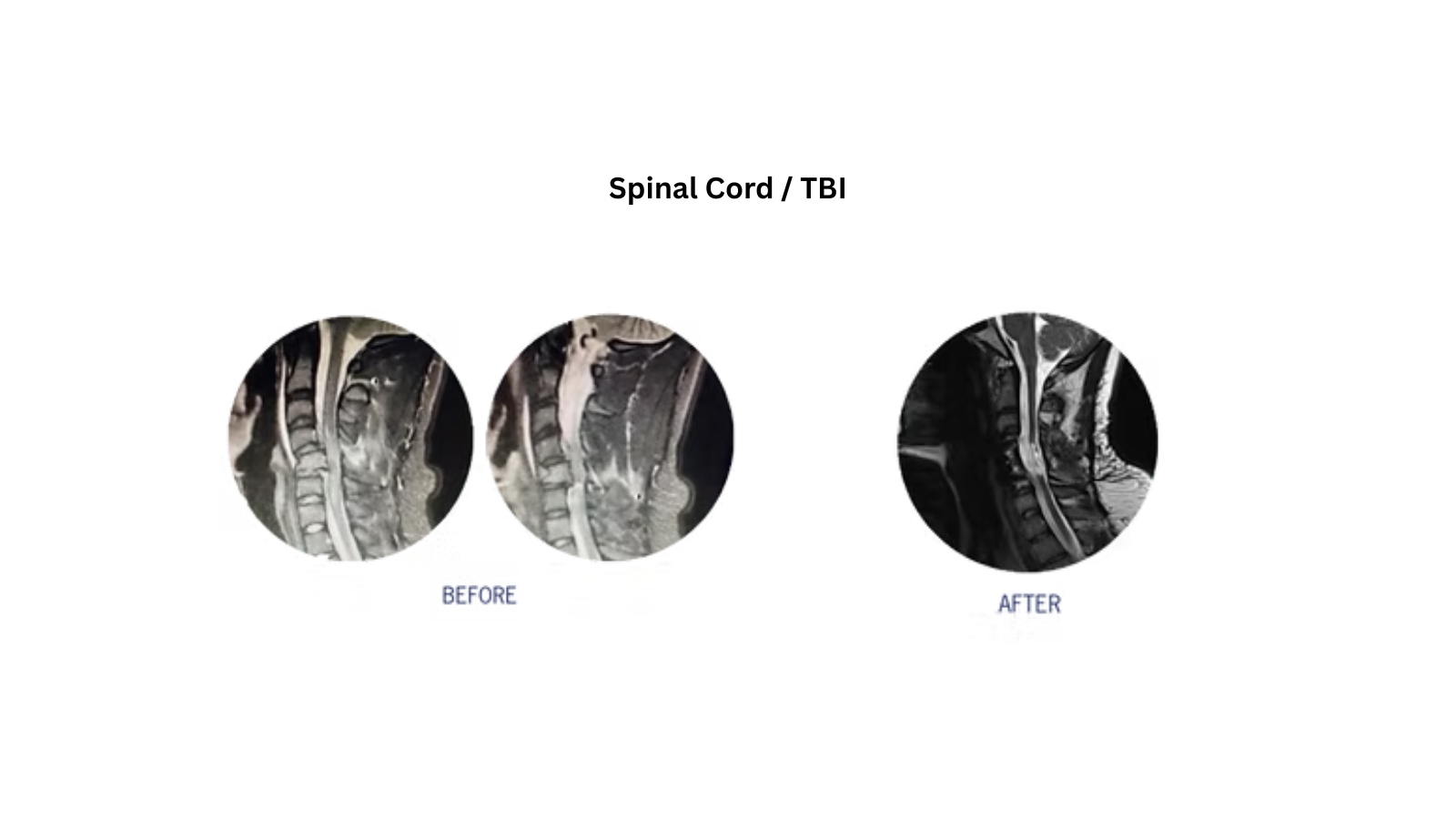
Traumatic Spinal Cord Injury
Rehabilitation of Traumatic Spinal Cord Injury with Regenerative Cell Therapy and Advanced Rehabilitation Techniques. This case highlights the potential synergy between regenerative cell therapy and advanced rehabilitation techniques in the rehabilitation of traumatic spinal cord injuries. By targeting both tissue repair and functional restoration, this multidisciplinary approach offers new hope for individuals with spinal cord injuries seeking to regain independence and mobility. Further research and clinical trials are warranted to validate these findings and optimize treatment protocols for maximal benefit.
Patient Information
- Age: 21 years old
- Gender: Male
- Ethnicity: White
- Medical History: Traumatic spinal cord transection at the C5–6 level resulting in quadriplegia.
Presenting Complaint
The patient sustained a traumatic spinal cord injury due to a fracture at the C5–6 level, resulting in quadriplegia. Traditional rehabilitation approaches yielded limited functional recovery, prompting the exploration of alternative treatment strategies.
Treatment Approach
To promote tissue repair and neurological recovery, the patient underwent a series of regenerative cell therapy sessions. Over a six-month period, he received ten units of complete regenerative cell factors per treatment.
Administration routes included intravenous, intranasal, and intrathecal delivery via lumbar puncture, ensuring both systemic and targeted neurological exposure.
Clinical Course
Following completion of regenerative cell therapy, the patient began an intensive rehabilitation program incorporating advanced low-voltage frequency therapy. This innovative modality focused on re-training sympathetic tone, improving core muscle control, and facilitating hip rotation to support ambulation without assistance.
Outcome
- Transition to Paraplegia: Neurological improvement allowed the patient to transition from quadriplegia to paraplegia, indicating restored function and sensation in the upper extremities.
- Functional Improvement: The patient demonstrated significant gains in motor control, including improved core stability and hip rotation, essential for independent ambulation and daily activities.
- Projected Full Functionality: Based on current progress, the healthcare team anticipates full functional recovery within the next 12–18 months.
Follow-Up
The patient continues to receive comprehensive follow-up care and rehabilitation support. Regular evaluations and individualized treatment adjustments are ongoing to optimize recovery and maintain progress toward functional independence.
Conclusion
This case underscores the potential synergy between regenerative cell therapy and advanced rehabilitation techniques in the treatment of traumatic spinal cord injuries. By addressing both tissue repair and functional restoration, this multidisciplinary approach offers renewed hope for individuals seeking to regain independence and mobility. Further clinical research is warranted to validate these outcomes and refine treatment protocols.